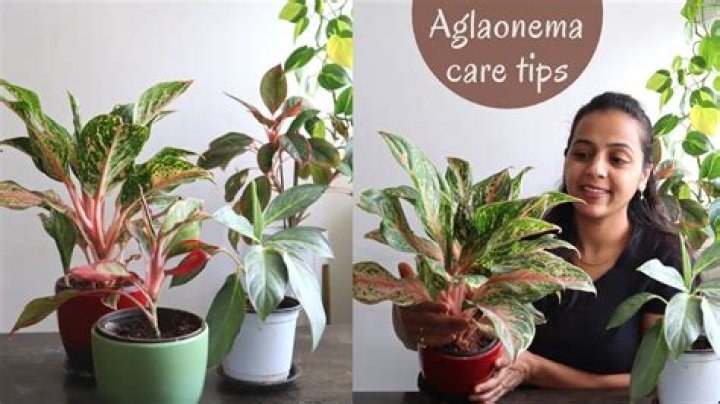
Slow-growing plant to 2 feet tall and wide, with leaves to 8 inches long, 4 inches wide. Leaves are bright green, with white spots and a broad white stripe along the midrib.
Does aglaonema grow fast?
Aglaonema plants are typically slow to medium-growing tropical plants. However, some species may have faster growth than others. For example, ‘Silver Bay’ and red ‘Siam Aurora’ plants grow faster than cultivars such as ‘Emerald Beauty. ‘ Chinese evergreens grow slower in winter and when in low light rooms.
How long does aglaonema take to grow?
The new plant should build its own roots quickly, in about 5 to 10 days. Make sure to keep your new plant in average to slightly warm temperatures – just like stem cuttings, new plants propagated using root cuttings will not do well in cold temperatures.
Does aglaonema grow tall?
Common NameChinese evergreen, Philippine evergreenBotanical NameAglaonema commutatumFamilyAraceaePlant TypeHerbaceous perennialMature Size1–2 ft. tall, 1–2 ft. wideHow do you keep aglaonema bushy?
- You can make your Aglaonema bushier by pruning it, giving it moderate amounts of indirect sunlight, and keeping it at a temperature between 70 and 85 degrees F.
- Direct sunlight will cause your Aglaonema’s leaves to burn, which may damage the plant and prevent it from becoming bushy.
Should I mist my Aglaonema?
This plant can survive in a low humidity environment, but it will thrive with a higher humidity level. Mist the leaves regularly using a Mister to raise the humidity. … A common problem with Aglaonema is called ‘tipping’ when the tips of the leaves dry out and turn brown.
How often should aglaonema be watered?
Watering. I water mine when dry. That tends to be every 7-9 days in the warmer months & every 2-3 weeks when winter comes around. The watering schedule will vary for you depending on your home environment, type of soil mix, and pot size.
Are aglaonema easy to care for?
PRO TIP: The Aglaonema is one of a handful of plants that can adapt to fluorescent lighting conditions. … The Aglaonema is a mainstay of favorite houseplant lists everywhere! With its unique and lush foliage, easy care, and ability to adapt to almost any home or office space, it’s hard to find a more versatile stunner.How do you take care of Aglaonema?
- Proper care for aglaonema starts with its proper placement. …
- Place your plant far from doors, air vents and windows in order to ensure it won’t suffer from drafts.
- Fertilize the species at least 2 times per month. …
- Water the plant when the top 2 inches of the soil start getting dry.
They are easy to grow, take low light levels, and the colors of the leaves are amazing. If they have good bright light conditions, you may find that they will send out flowers.
Article first time published onIs aglaonema an indoor plant?
Aglaonemas are slow-growing, attractive, and are great indoor plants as they do not like full sun exposure, great for inside. The Chinese Evergreen is a genus of flowering plants in the arum family, Araceae and are native to tropical and subtropical regions of Asia and New Guinea.
How do you crossbreed aglaonema?
To cross-pollinate Aglaonema and Dieffenbachia, it is necessary to obtain pollen from one inflorescence with ripe males and to manually transfer the pollen to another inflorescence that has receptive females (Figure 7). The pollen is not wind disseminated.
What is the best fertilizer for aglaonema?
Aglaonemas don’t require much food, so use a complete liquid fertilizer, fish/seaweed emulsion, or slow-release fertilizer once or twice in the growing season (spring through summer).
Where do you cut aglaonema to propagate?
The best way to propagate this gorgeous plant is by cutting a stem or division. Watch for new growth of the plant coming up at the base of it. Remove it from the base, then replant in a separate pot. Сhinese evergreen plants, or aglaonema plants, are beneficial.
How do I grow big aglaonema?
- Choose a warm sheltered spot in the garden that receives bright, indirect sun and has well-drained soil. …
- Dig a hole in the prepared area slightly larger than the root ball. …
- Remove the plant from the container, gently tease the roots and cut away any circled or tangled roots.
How do you keep aglaonema leaves shiny?
The best way to ensure the glossy red foliage looks stunning is to wipe it clean with a moist soft cloth once in 5-7 days. This will keep the dust off the leaves, making the plant look eye-catching always with deep hues!
Can aglaonema be cut back?
Dead-looking, mechanically damaged, yellow or brown stalks/petals need to be cut off too. It should be done up to the level of the wilt or damaged leafage. Prune your plant if it’s large, but without much frondage. Cut back around 3 cm of few stems and new petals will emerge.
Do aglaonema need big pots?
Aglaonema needs to be re-potted into one size bigger container, or it should be 2 inches more in diameter than the previous one, with new potting soil every 2-3 years. This plant grows best when it’s slightly root-bound, so seeing a few roots in the bottom drainage holes is acceptable.
Why do aglaonema leaves turn yellow?
The most common cause of yellowing leaves among Aglaonemas is improper soil moisture–in particular, overwatering. Only water your Aglaonema when the top 2-3 inches of soil are dry. Soil should remain damp, but not wet. In the winter, you can allow your plant to dry out a little more between waterings.
Should I cut yellow leaves off aglaonema?
Shedding Old Leaves A Chinese evergreen plant with few bottom leaves turning yellow is considered to be normal. It is one of the ways the plant sheds old foliage. The energy is diverted to the development of new foliage. Yellowing of aglaonema old leaves is quite common during autumn and winter.
Can I water aglaonema everyday?
Water and Food Needs Like all houseplants, aglaonema needs water to survive. But the plant can tolerate less water than many other houseplants. … Don’t water the plant daily and make sure you let the soil dry out somewhat between waterings.
Can you propagate an aglaonema?
Aglaonema is very easy to propagate in water or in soil via stem cuttings. You’ll get the best results with propagation done during the warm growing season. … Water-propagated specimens tend not to thrive when planted in soil. If you choose to propagate in water, it’s best to keep the mature plant in water, too.
What is the best soil for aglaonema?
A peat-based potting soil with extra perlite is recommended, but you can also consider blending in a bark-based orchid mix. The soil itself should be reasonably nitrogen-rich, but should be loose and not densely-packed. Lightly-acidic soil in a range of 5.6-6.5 pH is recommended for aglaonema growers.
Why do plants become leggy?
Legginess is caused by a lack of sunlight or by light that is either too weak or indirect to meet the plant’s needs. The stems grow thin because the plant is desperately reaching its leaves towards the light.
Is pumice good for aglaonema plants?
5 – green color aglaonema can tolerate low light whereas colorful and variegated ones need more indirect / filtered sunlight to maintain luster of leaves. Do not put your aglaonemas under the sun. 7 – soil/medium must be a well draining soil, perlite or pumice or sand will help much.
Should I cut the flower of aglaonema?
It is hard to find, very expensive when you do find it, and trickier to care for than other Aglaonemas. Be sure to cut the flowers off on this one if they do appear in order to keep the foliage in the best shape.
Do aglaonema plants like to be root bound?
Aglaonema likes to be slightly root-bound, so it’s a good idea to move to a pot that’s slightly larger. Use a container with drainage holes to prevent soggy soil.
How do you know when aglaonema needs water?
To determine if your Chinese Evergreen plant needs water just insert your fingertip into the soil. Moist soil will cling to your skin and is usually darker than dry soil. With larger pots you can pull out a little soil and squeeze it into a ball in your hand. If it is moist, it will hold together.
What are the benefits of aglaonema?
- It Purifies Air. It mainly removes toxic gases like Benzene, Formaldehyde, CO, etc.. …
- It Beautifies Your Room. …
- It Absorbs CO2 in the Night.
- This gorgeous leafy indoor plant emits Oxygen. …
- Best Bedroom Plant.
- A Great Oxygen Producing Houseplant.
How do you get seeds from aglaonema?
Propagation by seeds – Take the fresh aglaonema seeds which are found at the base of mature plant flowers, wash the seeds in H2O mixed water or in acidic water, prepare the seed germination soil mix or coco-peat mix, spread the seeds at the top it and cover very lightly.
How many types of aglaonema are there?
There are between 21-24 species of aglaonema, although the exact number varies depending on which botanical registry you are looking at. However, there are hundreds of different aglaonema varieties in a diversity of leaf colorations. The variations are myriad and all lovely!