The endogenous lipoprotein pathway begins in the liver with the formation of VLDL. The triglycerides carried in VLDL are metabolized in muscle and adipose tissue by lipoprotein lipase releasing free fatty acids and IDL are formed.
What is the source of lipoproteins?
Lipoproteins are synthesized in the liver and they obtain their mature form following interaction with enzymes that are present in the circulation. Lipoprotein-derived fatty acids are released by lipoprotein lipase and are then taken up by cardiomyocytes either passively or via fatty acid receptors, such as CD36.
What is a lipoprotein and why are they made?
Lipoproteins are substances made of protein and fat that carry cholesterol through your bloodstream. There are two main types of cholesterol: … Low-density lipoprotein (LDL), or “bad” cholesterol.
What are the lipoproteins formed in the blood?
There are four major classes of circulating lipoproteins, each with its own characteristic protein and lipid composition. They are chylomicrons, very low-density lipoproteins (VLDL), low-density lipoproteins (LDL), and high-density lipoproteins (HDL).How do lipoproteins work?
The role of lipoprotein particles is to transport fat molecules, such as triacylglycerols (also known as triglycerides), phospholipids, and cholesterol within the extracellular water of the body to all the cells and tissues of the body.
What is inside a lipoprotein?
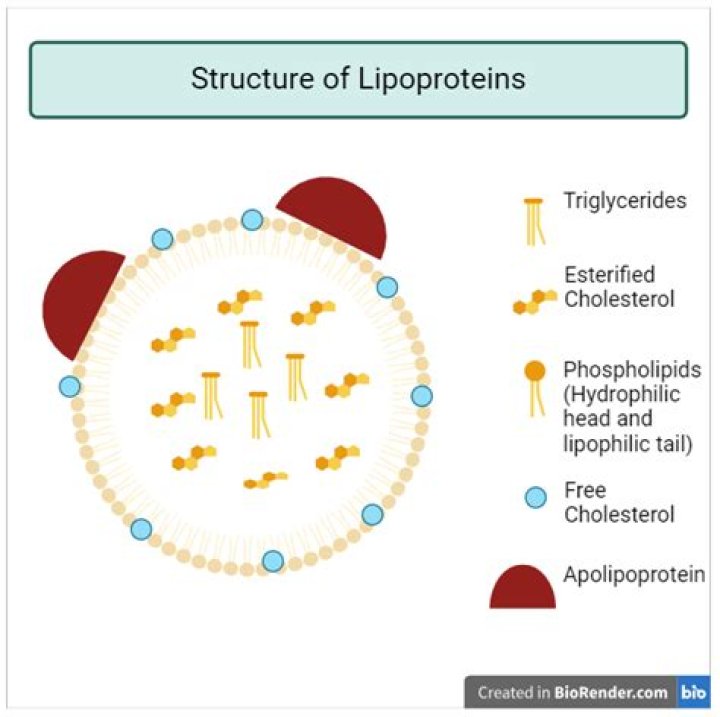
Lipoproteins are special particles made up of droplets of fats surrounded by a single layer of phospholipid molecules. Phospholipids are molecules of fats which are attached to a phosphorus-containing group. They are distinctive in being amphipathic, which means they have both polar and non-polar ends.
How is VLDL formed?
The formation of VLDL starts with the translocation of newly translated apoB100 across the rough ER membrane. In the first step, nascent apoB100 is partially lipidated to form a lipid-poor primordial VLDL particle. This step is facilitated by microsomal triglyceride transfer protein (MTP).
How are lipoproteins transported in the blood?
Triglycerides and cholesteryl esters are transported in the core of plasma lipoproteins. The intestine secretes dietary fat in chylomicrons, lipoproteins that transport triglyceride to tissues for storage. Dietary cholesterol is transported to the liver by chylomicron remnants which are formed from chylomicrons.What is the function of lipoprotein A?
Lipoprotein(a), or Lp(a), is a protein that transports cholesterol in the blood. High levels of Lp(a) in the blood can increase the likelihood of plaques or blood clots forming in the arteries. As a result of this effect, Lp(a) can increase the risk of cardiovascular disease.
What are lipoproteins quizlet?What is a Lipoprotein? –Spherical complexes of Lipids and Proteins. -Function: too keep lipids soluble as they transport them. -Function: transporting lipids to and from tissues.
Article first time published onIs lipoprotein A genetic?
Lipoprotein(a) [Lp(a)] is a highly atherogenic lipoprotein that is under strong genetic control by the LPA gene locus. Genetic variants including a highly polymorphic copy number variation of the so called kringle IV repeats at this locus have a pronounced influence on Lp(a) concentrations.
What causes high lipoprotein A?
Lp(a) levels are largely determined by genetics. Mutations in the LPA gene can lead to high levels [11]. Mutations in this gene can result in different sizes of apolipoprotein(a). Research has found that people with smaller apolipoprotein(a) particles have higher Lp(a) levels [11].
Why are lipoproteins needed?
Lipoproteins play essential roles in the body — specifically in: the absorption and transport of lipids in the small intestine. transporting lipids from the liver to tissues. transferring lipids from tissues to the liver, also known as reverse cholesterol transport.
What role do phospholipids play in lipoproteins?
Phospholipids regulate cellular processes related to growth, synaptic transmission and immune surveillance. Another function of phospholipids is that of assembling circulating lipoproteins. These proteins play the essential role of transport for lipophilic triglycerides and cholesterols in the blood.
What are the types of lipoproteins and their functions?
Two types of lipoprotein are involved in this function: low-density lipoproteins (LDLs) and high-density lipoproteins (HDLs). LDLs transport cholesterol from its site of synthesis in the liver to the body’s cells, where the cholesterol is separated from the LDL and is then used by the cells for various purposes.
Where are chylomicrons formed?
Chylomicrons are formed in the intestine and are the transport vehicle for dietary fat. The largest chylomicron particles have a diameter of over 1000 nm, whereas the smallest (75–200 nm) overlap with the apo B-100-containing lipoproteins.
How is VLDL formed in liver?
VLDL is assembled in the liver from triglycerides, cholesterol, and apolipoproteins. VLDL is converted in the bloodstream to low-density lipoprotein (LDL) and intermediate-density lipoprotein (IDL). VLDL particles have a diameter of 30–80 nm.
When is VLDL formed?
The formation of VLDL starts with the translocation of newly translated apoB100 across the rough ER membrane. In the first step, nascent apoB100 is partially lipidated to form a lipid-poor primordial VLDL particle. This step is facilitated by microsomal triglyceride transfer protein (MTP).
Do lipoproteins dissolve in the bloodstream?
In lipoproteins Cholesterol is minimally soluble in water; it cannot dissolve and travel in the water-based bloodstream. Instead, it is transported in the bloodstream by lipoproteins that are water-soluble and carry cholesterol and triglycerides internally.
What are the properties of lipoprotein?
Lipoproteins are globular struc- tures with an outer solubilizing coat of protein and phospholipid and an inner hydrophobic, neutral core of triglyceride and cholesterol. Through hydrogen bonding, the inner compo- nents bind to the protein coat.
When was lipoprotein A discovered?
Lipoprotein(a) [Lp(a)], aka “Lp little a”, was discovered in the 1960s in the lab of the Norwegian physician Kåre Berg. Since then, we have greatly improved our knowledge of lipids and cardiovascular disease (CVD).
How are lipids transferred in the blood?
Blood lipids are transported as lipoproteins due to their hydrophobic nature. Lipids are transported as lipoproteins in the blood. Lipoproteins: Lipoproteins consists of an inner core of hydrophobic lipids surrounded by a surface layer of phospholipids, cholesterol, and outer proteins (apolipoprotein).
How are lipids transported across the cell membrane?
Transport of long-chain fatty acids across the cell membrane has long been thought to occur by passive diffusion. However, in recent years there has been a fundamental shift in understanding, and it is now generally recognized that fatty acids cross the cell membrane via a protein-mediated mechanism.
How do lipoproteins transport cholesterol?
They bind to a specific cell receptor (LDL-receptor), and after endocytosis the intracellular cholesterol will be used to build cell membranes and to synthesize other molecules (biliary acids, hormones). The cholesterol present in peripheral tissues is taken up by high-density lipoproteins (HDL) and transferred to LDL.
What are lipoproteins composed of quizlet?
Lipoproteins are composed of varying proportions of cholesterol, triglycerides (TGs), & phospholipids. LDL & HDL carry most cholesterol.
What do lipoproteins do and what are the two types of lipoproteins quizlet?
LDL carries cholesterol to the peripheral tissues, while HDL carries out “reverse transport,” bringing cholesterol from the peripheral tissues back to the liver. Although each LP is composed of one predominant type of lipid, other lipids are usually present, too.
What is the primary function of lipoproteins quizlet?
The five classes of plasma lipoproteins function together to move lipids to the tissues from either the intestine or the liver, or to move lipids from tissues back to the liver. The lipoprotein complex is bound to a membrane protein at the receiving cell.
Does everyone have lipoprotein A?
Lp(a) is common in the general population, but there are racial differences that may explain why some people are at higher risk of heart disease. South Asians have the highest prevalence, with 35 percent of their population having Lp(a) greater than 50 milligrams per deciliter, followed by Africans at 30 percent.
Is lipoprotein a dominant or recessive?
Autosomal dominant hypercholesterolaemia (ADH) are a heterogeneous group of monogenic lipid disorders. The plasma level of lipoprotein(a) (Lp(a)) is a heritable trait associated with increased coronary heart disease (CHD) risk.
How common is high lipoprotein A?
Indeed, elevated Lp(a) is the most common genetic dyslipidemia, with nearly 1 in 5 individuals affected in the United States [ie, based on Lp(a) >50 mg/dL or >120 nmol/L].
Can diet lower lipoprotein A?
Background: Lipoprotein(a) [Lp(a)] is a highly atherogenic lipoprotein and is minimally effected by lifestyle changes. While some drugs can reduce Lp(a), diet has not consistently shown definitive reduction of this biomarker.