Tree size: Reaches a height of 40 to 70 feet with a width of 25 to 35 feet. It can reach a height of more than 100 feet. Growth rate is moderate.
How long does it take for a hemlock tree to grow?
Eastern hemlock (Tsuga canadensis), also called Canada hemlock or hemlock spruce, is a slow-growing long-lived tree which unlike many trees grows well in shade. It may take 250 to 300 years to reach maturity and may live for 800 years or more.
How far apart should hemlock trees be planted?
Location – Hemlocks prefer partial sun, but tolerate full sun to full shade. Plant trees at 4 feet apart or in a hedge Planting – The best time to plant hemlocks is in early spring. Hemlocks can be sensitive if planted in the fall and extra care should be taken to water, fertilize, and protect from winter salt spray.
Do hemlocks grow fast?
This tree grows at a slow to medium rate, with height increases of anywhere from less than 12″ to 24″ per year.Where do hemlock trees grow best?
The trees prefer partial shade, especially in areas with hot summers, but do require daily direct sun. If your region gets strong winds, pick a planting spot with wind protection. To offer the best Canadian hemlock care, plant your tree in well-drained loam or sand. The soil should be acidic rather than alkaline.
Will deer eat hemlock?
Deer often bed down underneath these trees, taking advantage of shallower snow and sheltering branches. … Deer will also eat hemlock foliage and twigs as high up as they can reach. Porcupines prefer hemlock and will eat the bark and chew off large twigs.
Are hemlock trees deep rooted?
Though the various species of hemlock have a number of different root system types, the two most common are taproot and fibrous roots. … The taproot digs deep and is thicker than the small roots surrounding it. These small roots branch laterally in the soil.
How do you care for a hemlock tree?
They need acidic soils that stay moist, but not wet, and frequent waterings. Like willows, hemlocks are riverbank trees, so if your site is elevated and dry, you may need to add a thick ring of mulch over your tree’s root zone and consider installing a drip irrigation system to keep your tree looking its best.What are hemlock trees used for?
Eastern hemlock is used primarily for lumber and paper pulp. About three-fourths of the hemlock lumber produced is used for light framing, sheathing, roofing, and subflooring.
Do hemlocks need sun?Hemlocks do not thrive under hot, dry conditions. They grow well in partial shade and will tolerate full shade. Hemlocks also grow well in full sun if their soil requirements are met.
Article first time published onIs there a dwarf hemlock?
The “Gracilis” hemlock (Tsuga canadensis “Gracilis”) grows in zones 4 through 8 and is a dwarf cultivar of the Canadian hemlock. This slow-growing evergreen will reach heights of up to 6 feet tall with an 8-foot-wide span and thrives in areas with partial shade to full sun.
How much water do hemlock trees need?
Provide a transplanted tree with 1-inch of water weekly until established. A soaker hose allows water to trickle down to the root zone and prevent the root ball from drying out. Thereafter, water during periods of drought to reduce plant stress. Dig a hole two to three times the size of the Hemlock root ball.
Is hemlock a tree or bush?
hemlock, (genus Tsuga), any of about 14 species of coniferous evergreen trees comprising the genus Tsuga of the family Pinaceae, native to North America and central and eastern Asia. Some are important timber trees, and many are popular ornamentals. Many varieties are used in ornamental plantings. …
What can I plant under hemlocks?
Scientific NameCommon NameSoil MoitureArctostaphylos uva-ursiBearberryDry-mediumAsarum canadenseWild GingerDry-mediumAquilegia canadensisColumbineDry-mediumAster divaricatusWhite Woodland AsterDry-medium
Is the hemlock tree poisonous?
Poison-hemlock is acutely toxic to people and animals, with symptoms appearing 20 minutes to three hours after ingestion. All parts of the plant are poisonous and even the dead canes remain toxic for up to three years. … Eating the plant is the main danger, but it is also toxic to the skin and respiratory system.
What does hemlock tree look like?
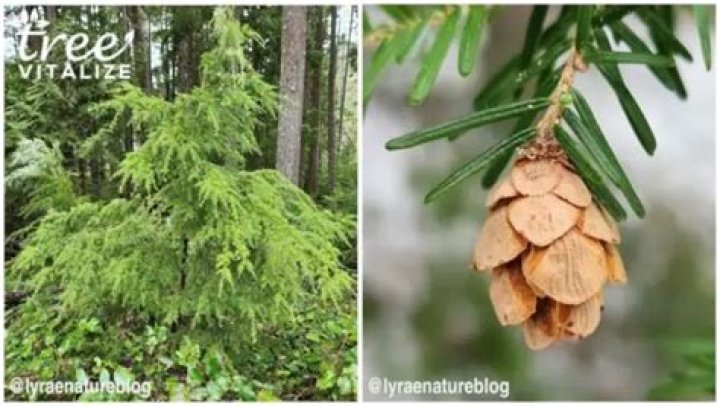
Hemlock trees are dark green (and often appear darker than pines) and have somewhat droopy, lacy-looking branches. They can be found in beech-maple forests, coniferous swamps, forested dunes (usually north facing), and along river corridors.
Is hemlock a pine tree?
Hemlock is evergreen tree that belongs to the pine family. There are around 10 species of hemlock that are native to America (4 species) and Asia (remaining 6 species). Hemlock inhabits dense, moist habitats that are characterized by dry, rocky soil.
How tall do dwarf hemlock trees grow?
Dwarf varieties that reach only 3 to 4 feet tall include “Gentsch White” and “Moon Frost.” “Pendula” has a weeping form that grows to 10 feet wide but only 5 feet tall.
Can you overwater a hemlock?
Hemlocks are a very stable tree once they are established in your landscape. After the initial installation adequate water is essential for not only establishment but also continued growth and development. Initially water ~ 10 gals per week. Do not allow the roots to dry out BUT do not overwater.
How long do mountain hemlock trees live?
Mountain hemlock trees, like many other hemlock species, are rather long-lived. They have an average life expectancy of 500 years, but when they grow in the ideal conditions they can exceed 800 years.
Does hemlock grow in full sun?
Light. Unlike many large trees, Canadian hemlocks grow best in full to part shade and will tolerate full sun in cold northern climates. Their sunlight requirements provide quite a bit of flexibility if you live in a cold climate (USDA Zones 3 to 5).
Do goats eat hemlock?
Poison Hemlock (Conium maculatum) is a toxic plant that grows along irrigation ditches and water sources throughout the United States. … Goats and sheep can eat as little as 3 ounces of the plant and show clinical signs; however sheep tend to be able to metabolize the toxin better than most species.
What lives in hemlock trees?
Likewise, numerous bird and other animal species are strongly associated with hemlock forests including white tailed deer for whom young hemlock foliage is a preferred browse, and as many as 90 bird species, including the black-throated green warbler, the Blackburnian warbler and the Acadian flycatcher.
How much is a hemlock tree worth?
Species & ProductRecent RangeSpruce/Fir Sawlogs$100.00 to $1700.00 per MBFPulpwood$2.00 to $5.00 per tonHemlock Sawlogs$45.00 to $125.00 per MBFPulpwood$5.00 to $9.00 per ton
Which is stronger hemlock or pine?
It is much stronger and harder than pine. It is used as cribbing (jacking timbers) and in situations requiring high strength. Green hemlock is very heavy but is easily worked with tools. Once dry, hemlock is very difficult to work.
Are hemlock trees worth money?
&bsp; For the tree grower, hemlock in 8 foot to 16 foot length logs is worth $. 25 a board foot when brought to the saw mill. … In the case of dying hemlocks, the landowner has to pay the logger to come cut the tree and haul it off, which most likely will cost him more than the value of the wood.
Can you cut the top off a hemlock?
Hemlock trees will grow new branches from the needle whorls, and pruning just above them will ensure that the new branches come in properly. If damage to the hemlock tree is extensive, severe pruning may be needed. Hemlock trees can withstand severe pruning and will recover from losing as much as 50% of its branches.
What's the fastest growing evergreen tree?
Make it quick with the Murray Cypress. One of the fastest-growing evergreen trees, the Murray Cypress (Cupressocyparis x leylandi ‘Murray’) can spurt up to 4 feet in a single year until it reaches a mature height of 30 to 40 feet and a base width of 10 feet.
Can you transplant hemlocks?
Hemlock trees form a pyramidal shape with gracefully drooping branches. Choose to transplant small hemlock trees that are less than 4 feet in height for best results. … Dig a hole in the new hemlock planting location twice as wide as the estimated root ball and the same depth.
How do you get a hemlock?
Hemlock poisoning occurs after ingesting any part of the plant, such as the seeds, flowers, leaves, or fruits. All parts of this plant contain toxic alkaloids that can be fatal even in small amounts. The alkaloids can affect nerve impulse transmission to your muscles, eventually killing you through respiratory failure.
What is a hemlock hedge?
As an evergreen hedge. … Green and graceful, the hedge is a pleasant addition to any neighborhood. Once established, the hemlock hedge withstands drought, subzero weather and heavy snow. Remarkably free from diseases, it needs no fertilizer and is an effective windbreak. Its density discourages intruders.