At x-ray energies, filters consist of material placed in the useful beam to absorb, preferentially, radiation based on energy level or to modify the spatial distribution of the beam. Filtration is required to absorb the lower-energy x-ray photons emitted by the tube before they reach the target.
What filtration is used in x-ray tubes?
The units of filtration are expressed in mm of aluminum equivalence (mm Al eq). There are two types of filtration 2: inherent filtration from components in the x-ray tube, i.e. window, housing, cooling oil (equivalent to 0.5-1.0 mm Al) added filtration from interchangeable metal sheets (Al, Cu, etc.)
How are x-rays captured?
Modern X-rays are normally taken by placing a body part (such as an injured arm or leg) in front of an X-ray detector and subjecting it to a short burst of X-rays; the process takes about 1/50th of a second. X-rays can also be taken of the lungs where trapped gases absorb less radiation than the surrounding tissue.
Why are filters used in x-ray instrument?
For medical purposes, X-ray filters are used to selectively attenuate, or block out, low-energy rays during x-ray imaging (radiography). Low energy x-rays (less than 30 keV) contribute little to the resultant image as they are heavily absorbed by the patient’s soft tissues (particularly the skin).What material absorbs xray?
Calcium in bones absorbs x-rays the most, so bones look white. Fat and other soft tissues absorb less and look gray. Air absorbs the least, so lungs look black.
Can X rays pass through iron?
If you have a metal implant, obviously you can’t remove it for an X-ray. … The reason metal appears bright on the X-ray image is that it is extremely dense, so X-radiation does not penetrate it as well as it does soft tissues. This is also why bones appear bright on an X-ray.
What are the two types of filtration?
- Centrifugal filtration. Centrifugal filtration is a type of filtration system that achieves filtration by subjecting the filter body to a rotational movement. …
- Gravity filtration. …
- Vacuum filtration. …
- Cold filtration. …
- Hot filtration. …
- Multi-layer filtration. …
- Mechanical filtration. …
- Surface filtration.
Which is a benefit of filtering the x-ray beam?
Filtration reduces x-ray intensity, but not the maximum energy of the x-ray beam spectrum. The change in the shape of the beam spectrum with filtration is referred to as beam hardening. This is due to the loss of lower energy photons from a polychromatic beam.What can X rays not penetrate?
X-rays have more energy than any other electromagnetic waves except gamma rays. For example, X-rays have enough energy to pass through soft tissues such as skin, although not enough to pass through bones and teeth, which are very dense.
How are X-rays generated?X-rays are commonly produced in X-ray tubes by accelerating electrons through a potential difference (a voltage drop) and directing them onto a target material (i.e. tungsten). … The X-ray photons produced in this manner range in energy from near zero up to the energy of the electrons.
Article first time published onWhy is molybdenum used in X-rays?
The anode converts the energy of incident electrons into x-rays dissipating heat as a byproduct. … Molybdenum is also often used as the target material for anodes used in mammography because it has an intermediate atomic number (Z=42) and the produced characteristic x-rays are of energies suited for this purpose.
What are types of filter?
Four Major Types of Filters The four primary types of filters include the low-pass filter, the high-pass filter, the band-pass filter, and the notch filter (or the band-reject or band-stop filter).
Do bones absorb x-rays?
Different parts of the body absorb the x-rays in varying degrees. Dense bone absorbs much of the radiation while soft tissue (muscle, fat, and organs) allow more of the x-rays to pass through them. As a result, bones appear white on the x-ray, soft tissue shows up in shades of gray, and air appears black.
Are x-rays safe?
Generally, the amount of radiation you’re exposed to during an X-ray is the equivalent to between a few days and a few years of exposure to natural radiation from the environment. Being exposed to X-rays does carry a risk of causing cancer many years or decades later, but this risk is thought to be very small.
Can XRAY be photographed?
X-ray photography A photographic technique in which X-rays are used that may reveal internal detail (e.g. of a fossil) which is not visible externally. The technique has the advantage that it is non-destructive.
What type of filters can be used during filtration?
Two main types of filter media are employed in laboratories: surface filters, which are solid sieves which trap the solid particles, with or without the aid of filter paper (e.g. Büchner funnel, belt filter, rotary vacuum-drum filter, cross-flow filters, screen filter), and depth filters, a bed of granular material …
What are filtration techniques?
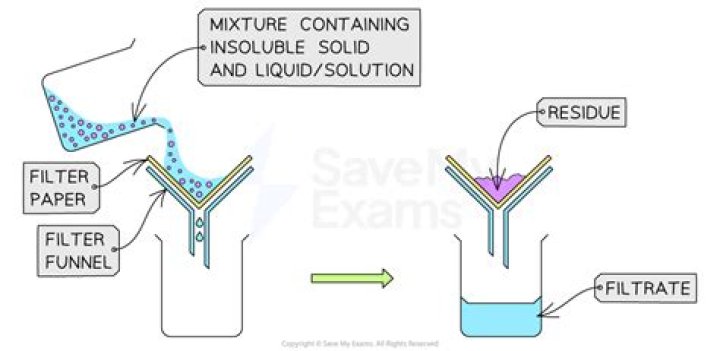
Filtration, the technique used to separate solids from liquids, is the act of pouring a mixture onto a membrane (filter paper) that allows the passage of liquid (the filtrate) and results in the collection of the solid.
What is filtrate biology?
The liquid that passes through a filter. Tags: Molecular Biology.
Can XRAY pass through glass?
X-rays work just like visible light (in fact they’re just a higher energy form of light) in that they are able to pass straight through some materials (just like light passes through glass) but not through others (just like light doesn’t get through walls).
Does XRAY pass through wood?
X ray: Applications of X Rays This ability varies with different substances; e.g., wood and flesh are easily penetrated, but denser substances such as lead and bone are more opaque. … Photographs made with X rays are known as radiographs or skiagraphs.
Which of the following surfaces on the x-ray machine must be covered or disinfected?
X-Ray Machine The tubehead, position-indicating device (PID), control panel, and exposure button must all be covered or carefully disinfected.
What are the three prime factors that affect x-ray emission?
The prime factors that affect x-ray quantity are milliamperage-seconds (mAs), kilovoltage (kVp), source–image receptor distance (SID), and filtration. The factors that affect x-ray quality are kilovoltage and filtration. Note that kilovoltage and filtration affect both quantity and quality (Box 7-1).
What happens to the x-ray beam if you increase the added filtration in the X-ray tube?
Addition of a filter shifts the x-ray emission spectrum to the high-energy side, resulting in an x-ray beam with higher effective energy, greater penetrability, and higher quality, but less intensity.
Why Molybdenum is used as the target?
Molybdenum is used as a target element for production of X – rays because it is. In X-ray tube , target must be heavy element with high melting point.
What is focusing Cup in xray?
It is called focusing cup. It is given negative electrical potential so that electrons emitted from cathode do not spread away. Because of focusing cup these electrons rush towards anode in a small stream only. Anode is the positive side of x-ray tube.
What are the 3 types of filtration?
The three main types of filtration are mechanical, biological, and chemical filtration.
What are the five types of filtering?
- Based On Their Construction: Passive Filters. Active Filters.
- Based On Their Frequency Response: Low Pass Filter. High Pass Filter. Band Pass Filter; Band Reject Filter;
How are filters classified?
Filter is mainly classified into two types: Active Filter. Passive Filter.
Does poop show up on X-rays?
Radiography can detect fecal impaction and fecalomas in the colon and rectum however provides no sensitive or specific findings of stercoral colitis [3, 13, 14].
Can X-rays pass through plastic?
X ray scans that show up the organs lurking inside your body are just as useful for checking bags at airport check-ins: X rays pass straight through soft materials such as leather and plastic but are blocked by the metal in guns, knives, and weapons.
Why do bones Block X-rays?
The calcium in bone blocks X-rays completely. This creates a white shadow on the film. Because soft tissues such as organs, muscles, fat and nerves block part or none of the beam, they appear in shades of gray.