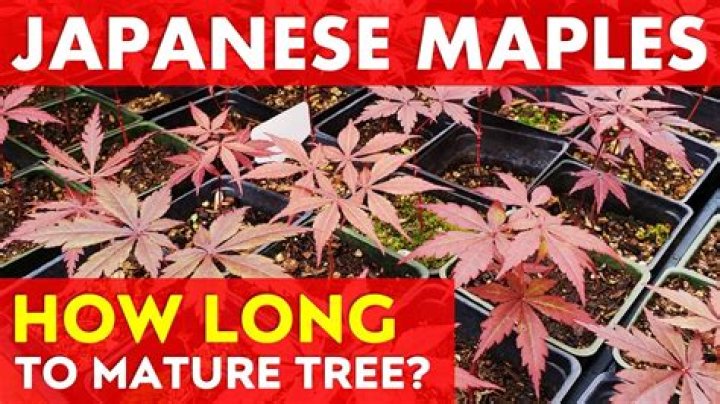
Botanical NameAcer palmatumNative AreaJapan, China, Korea, parts of Mongolia and Russia
Does Japan have maple leaves?
In Japan, maple trees are known as kaede (楓/”frog’s hands”), as well as momiji (紅葉), which means both “become crimson leaves” and “baby’s hands.” Momiji is commonly used as the term for autumn foliage in general in Japanese, but it is also used as a term for maple trees.
Is Japanese maple a maple?
Hardiness5 – 9 What’s My Zone?Plant TypeShrubs, TreesPlant FamilyAcer – MaplesExposureFull Sun, Partial SunSeason of InterestFall
Is the Japanese maple from Japan?
Japanese maple refers to the tree’s native habitat of Japan. Japanese maple grows in Japan, central China and Korea. It has been long cultivated by the Japanese.How do I identify a Japanese maple tree?
Japanese maples are identified by their rounded crown, palmately lobed leaves, and magnificent fall colors. Japanese maples can grow between 20 and 30 ft. (6 – 10 m); however, dwarf Japanese maples reach between 4 and 8 ft. (1.2 – 2.4 m).
Are red maple and Japanese maple the same?
“Red maples” fall into four basic groups: true red maples, Norway maples with red foliage, upright Japanese maples, and weeping cut-leaf Japanese maples. True red maples (Acer rubrum) are magnificent shade trees with GREEN foliage that generally grow 40 feet tall and wide, although some get much larger.
Where do Japanese maples grow in Japan?
Japanese maple is a woody plant native to Japan, on Honshu, Hokkaido, and Kyushyu islands. There are many maple species in Japan, but most of the trees that gardeners call Japanese maples are varieties of A. japonicum and A.
What is the name of the Japanese tree?
Acer palmatumClade:AngiospermsClade:EudicotsClade:RosidsOrder:SapindalesHow many varieties of Japanese maple are there?
After thousands of years of collecting and breeding, there are at least a thousand different varieties of Japanese maples. Some are quite similar to each other and only of interest to collectors, but there are many unique and special forms of outstanding beauty which are very popular with all gardeners.
What is a Japanese maple look like?Many Japanese maples (Acer palmatum) have palmate leaves of red, purple, orange or gold, especially in spring or fall. Plants that look like Japanese maples also have colorful palm-shaped leaves, but the foliage usually retains its color throughout the growing season.
Article first time published onIs an Acer the same as a Japanese maple?
Acer japonicum- also known as the Amur maple, this is a species native to Japan and south Korea. They tend to be more cold hardy than other Japanese maples and are ideal for bringing an architectural presence to the garden.
What kind of tree is a Japanese maple?
Japanese maple tree often refers to maple tree cultivars from Acer palmatum, and also may include maple trees from species Acer japonicum, and Acer shirasawanum (and even closely related species A. circinatum – N. American native).
Why is the Japanese maple red?
Maple Trees in the Landscape Many Japanese maple trees have red leaves all year. This characteristic is due to high levels of anthocyanins in the leaves throughout the year. The higher levels of the pigment show through the chlorophyll even during spring and summer.
Is Japanese maple a hardwood or softwood?
The maple tree is a member of a group of 200 species of trees and shrubs worldwide that belong to the Acer family. All maples are hardwoods but the species found in America are further classified as hard or soft maples.
What is the most beautiful Japanese maple?
Aconitifolium. One of the most beautiful Japanese maples, ‘Aconitifolium’ offers deeply cut, fern-like green foliage that turns shades of red, orange, and yellow in fall. This tree, also called ‘Maiku Jaku’, changes up the beautiful texture you’ve come to expect from most Japanese maples.
Why is my Japanese maple green?
The most common deficiency in Japanese maples is manganese. … Some Japanese maple cultivars that normally feature red leaves can lighten and turn green if they do not receive adequate sunlight. A Japanese maple suffering from a nutrient deficiency will typically have yellow or yellow-green leaves with darker veins.
Why are Japanese maple trees so expensive?
Answer- It takes quite some time for a Japanese Maple tree to grow up its size. That is why they are costly in the market along with high demand. The standard type like the Bloodgood is priced at $80 – $120 for six-foot-tall potted trees at nurseries. The rarest of Japanese Maple could be priced twice as much.
Are Japanese maple trees male or female?
Japanese maples are monoecious meaning they have both male and female flowers on the same plant. These flowers are inconspicuous and small, and though they do not attract insects, grouse, quail, and many songbirds adore them.
What is a Chinese maple tree?
The Chinese paperbark maple (Acer griseum) grows upright with an oval to rounded top, up to 30 feet tall and 25 feet wide. The green leaves are silvery on the underside and turn bright red and orange in the late fall or early winter. The bark is a cinnamon or reddish brown, turning purple brown as it ages.
What is the most beautiful maple tree?
Most important of all, the Sugar Maple has amazing color. In the spring and summer, the leaves are a shade of rich green that develop shades of gold, orange and red during fall. This tree has three different traffic-stopping colors every spring, causing it to stand out as the prettiest tree on the block.
Do Japanese maples stay red?
With a range of foliage colors–red, green, orange, purple, white, and pink depending on the season–Japanese maples are among the most colorful of trees. Some leaf out in brilliant reds in spring, change to green by summer, and finish the fall in yellows and oranges. Others start red and stay red till autumn.
Can Japanese maple take full sun?
All Japanese maples are tolerant of part shade conditions. Like Dogwoods and Redbuds, they evolved to grow happily at the edge of the forest as small trees. Their undeniable beauty leads many people to want to plant them as a focal point or specimen tree, often in full sun.
What will grow under a Japanese maple tree?
Japanese Maples are easily grown in moist, organically rich, slightly acidic, well-drained soils. Great companion plants are those sharing the same cultural requirements. Among the acid-loving plants are Rhoddendrons, Azaleas, Kalmia latifola (Mountain Laurel) and dwarf conifers.
Do Japanese maple lose their leaves?
Do all Japanese maples lose their leaves? Yes! Japanese maples are deciduous trees. During October and November maples provide a lovely show of fall color. Then in late November, or December, the leaves drop.
Is Japanese maple Evergreen?
Evergreens stay green year round, usually a member of the conifer family such as pine or spruce. Japanese maple trees (Acer Palmatum) turn brilliant colors of red, orange and gold in the fall. Your front yard will be graced by either.
Are there dwarf Japanese maples?
Dwarf Japanese maples are slow-growing, compact trees that grow to about 3 to 8 feet in height, depending on the cultivar. They tend to have small leaves, short internodes and profuse branching.
When did the Japanese maple come to America?
While Japanese Maples have always been appreciated by garden enthusiasts, it wasn’t until the late 20th century when the trees became available commercially that their popularity exploded and they began popping up in neighborhood landscapes, including Portland.
What trees are similar to Japanese maple?
- Acer grandidentatum (bigtooth maple)
- Cotinus obovatus (American smoketree)
- Rhus lanceolata (prairie sumac)
- Fraxinus texensis (Texas ash)
Do green Japanese maples turn red?
Then there’s the Fall Color. Japanese maples look their best in autumn. Depending on the cultivar, their leaves can become various shades of blood red, glowing gold, or brilliant orange. They also change color very late in the season, thus extending fall color almost to winter. … It’s the red to purple leaf color.
What is the difference between Acers and maples?
As nouns the difference between acer and maple is that acer is while maple is a tree of the acer genus, characterised by its usually palmate leaves and winged seeds.
Are Acers OK in shade?
It will grow very well in shade although may lose some of the intensity of its foliage color in heavy shade. … Acer shirasawanum ‘Aureum’ or ‘Autumn Moon’ are stunning smaller and slower growing maples that will brighten up a shady location.