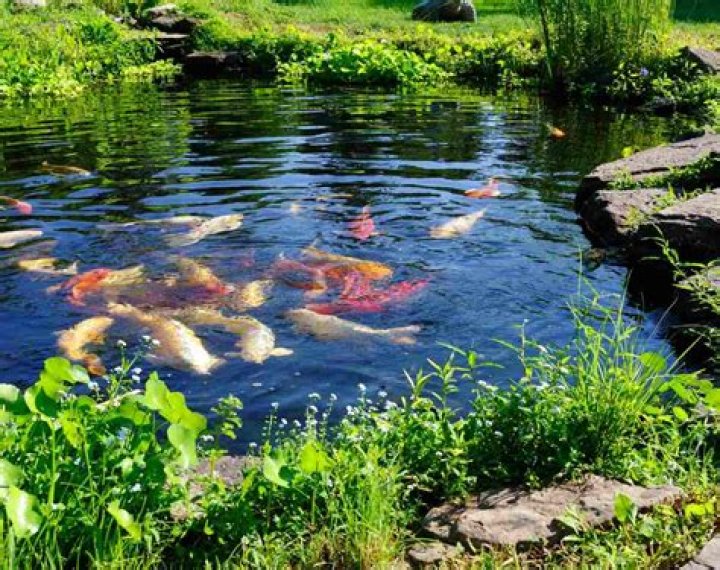
How Are Water Plants Good for Fish and Wildlife? Water plants are extremely beneficial for fish and other wildlife because they contribute to balanced ecosystem producing more oxygen, providing the necessary habitat for all levels of life forms to thrive. They are the foundation of a naturally balanced pond.
How do the fish and the plants of the pond help each other?
Plants absorb nutrients in the water from fish waste and reduces nutrient availability slowing algae blooms. Shade and protection for fish. Plants can provide a hiding place for fish from predators both above and below the water. … Aquatic plants in the pond improves its aesthetics.
How is pond water useful to animals?
They are an important source of food, shelter, and shade for the small animals that live in the pond. They also serve to reduce evaporation, purify water by removing excess minerals, prevent the overgrowth of algae, and even control the mosquito population.
Why are plants good for ponds?
All pond plants will provide natural filtration, being able to remove excess nutrients that can cause problems with water clarity. … Firstly, pond plants provide natural filtration to your water, helping remove excess nutrients, such as nitrates and phosphates, and using these to grow.Do pond plants use water?
Depending on the type you have, pond plants are another cause of water loss because they consume water from the pond. … When its leaves are hanging into the water, it will consume a large amount of water. Especially because it’s a large tree.
How do aquatic plants help the environment?
The role of aquatic plants Aquatic plants are a food source for animals and other aquatic creatures; they provide habitat for aquatic organisms and cover for smaller fish. … When aquatic plants grow, they produce oxygen, which is critical for a healthy lake ecosystem. Bacteria found in water also rely on oxygen.
Is Pond water good for plants?
Due to the rich nutrient profile of pond water, it can serve as organic fertilizer for plants. Plant fertilizer will typically contain nitrogen and phosphorus, which are vital for proper plant growth. As pond water has relatively high concentrations of these elements, it is often called “fertile water”.
What plants will need to be introduced to the pond ecosystem?
- Creeping Jenny Pond Plants. …
- Pickerel Pond Plants. …
- Horsetail Pond Plants. …
- Taro Pond Plants. …
- Cardinal Flower. …
- Water Lettuce. …
- Mosaic Plant. …
- Blue Iris.
What do pond plants depend on to survive?
Plants in a Pond Ecosystem Plants need sunlight for photosynthesis, so sunny ponds are more successful than those situated in shady areas. There is a food chain in the pond, and it starts with microscopic phytoplankton and algae.
What plants does a pond need?- Flowering rush, Butomus umbellatus.
- Marsh marigold, Caltha palustris.
- Bowles’s Golden Sedge, Carex elata ‘Aurea’
- Egyptian paper rush, Cyperus papyrus.
- Chameleon plant, Houttuynia cordata ‘Chameleon’
- Yellow flag iris, Iris pseudacorus.
- Purple loosestrife, Lythrum salicaria.
When should you plant pond plants?
When thinking about planting in your pond, the best time to do this is during spring or early summer months. This is because of the water being warmer and the plants are ready to bloom. Planting in the spring allows your plants more time to get established, however you can plant anytime throughout the growing season.
How do water plants clean water?
Every aquatic plant cleans water. They filter out minerals, carbon dioxide, ammonia, nitrates and nitrites. This filtering of the water helps keep the water clear and clean. If ornamental fish inhabit the pond, aquatic plants help create a habitable environment conducive to fish growth, health and protection.
How do fish get into ponds naturally?
A pond that forms near other ponds may receive new fish from passing birds of prey dropping their catch. Similarly, fish roe that remains damp enough during a trip between ponds may wash off of the fur and feet of local animals as they move from pond to pond.
How does pond help the environment?
How does the pond ecosystem work? A pond ecosystem works with the natural environment to provide food and protection to the wildlife and plants it supports. Fish nibble on the plants and algae, producing waste that is broken down and absorbed as nutrients by the plants.
What fish live in a pond?
The most common species stocked in ponds are the largemouth bass, bluegill, and channel catfish. Other species that can be used for specific management objectives include fathead minnows, crappie, black bullhead, redear sunfish, and gizzard shad. Green sunfish and carp are also often found in ponds.
Does fish water help plants grow?
The “nutrient-rich” water (which is what Metro Farms is bottling up and selling as Fish Dew) circulates to the plants, and acts as a fertilizer to help them grow. In turn, the plants process the nutrients and clean the water so it’s ready to go back to the fish tanks.
How much water do plants use?
Water use was not constant during the study; small plants used 1 tablespoon per day, while large plants used slightly less than 2 tablespoons per day. Overall, there was a good correlation between plant growth and the amount of water applied.
What plants can grow in water?
- Philodendron. Image Credit: Retro Den. …
- Lucky Bamboo. Botanical Name: Dracaena sanderiana. …
- Pothos. Botanical Name: Epipremnum aureum. …
- Chinese Evergreen & Dumbcane. Botanical Name: Aglaonema & Dieffenbachia. …
- Spider Plant. Image Credit: All for Gardening. …
- Arrowhead Plant. …
- Coleus. …
- Wandering Jew.
What are the uses of pond water?
Apart from their role as highly biodiverse, fundamentally natural, freshwater ecosystems ponds have had, and still have, many uses, including providing water for agriculture, livestock and communities, aiding in habitat restoration, serving as breeding grounds for local and migrating species, decorative components of …
Is fish pond sludge good for plants?
Pond scum breaks down relatively quickly and is a fantastic source of nitrogen for your garden area. You can use this pond sludge as a really good fertilizer that will help your plants to thrive. The pond sludge will give your plants potassium and phosphorus so that they can grow strong.
Can you water plants with lake water?
Lakefront property owners have riparian right to “reasonable use” of lake water. This year’s drought has stressed waterfront landscapes as well as upland areas. Residential lakefront property owners may ask if using lake water to irrigate their lawns is allowable. The answer is yes.
What do plants provide for the fish?
Plants provide safe areas for fish to lay eggs and for young fish as they grow and develop. Plants also release oxygen into the water which fish need to “breathe”. Plants that live along the shores of lakes and streams are also important to fish.
Why are aquatic plants so important?
The aquatic plant community is a critical habitat and nursery for fish, a source of oxygen for all organisms, a refuge for prey as well as a foraging area for predators, a buffer against erosion and sediment resuspension from both waves and shoreline inputs, and can significantly contribute to overall lake primary …
Why do we use a water plant?
Water is used for transpiration carrier of nutrients from the soil to green plant tissues. … Water is essential for the germination of seeds, growth of plant roots, and nutrition and multiplication of soil organism. Water is essential in hydraulic process in the plant. It helps in the conversion of starch to sugar.
How do plants adapt in a pond?
Some aquatic plants have strong roots that keep them anchored securely, while others have stems that bend easily with the movement of the water. Certain mosses are able to cling to rocks. Plants who live in still waters have different adaptations. Water lilies, algae, and duckweed float on the surface.
Do plants grow in ponds?
There are five categories of pond plants. While some are more likely to do well in larger ponds, all can be used in ponds of any size. … Floating Plants: They need no soil; roots obtain nutrients from the water. Marginal Plants: Their roots can be in the water but don’t have to be.
What are living things in a pond?
- Pond-skaters.
- Water snails.
- Leeches and worms.
- Water beetles.
- Water boatmen.
- Freshwater mussels.
- Larvae (caddisfly, alderfly, dragonfly and damselfly to name a few)
How does water supports plant and animal life?
They use water directly when they capture the light energy of the sun and transform it into energy. Plants are the foundation of all food chains so animals and humans rely heavily on plants for their survival. The water cycle is also reliant on plants filtering the water and releasing it back into the atmosphere.
What types of plant tree life grow in Lake pond ecosystems?
Plants include milkweed, water lilies, duckweed, cattail, cypress trees, and mangroves. Scientists that study freshwater bodies of water like ponds, lakes, and rivers are called limnologists.
Do pond plants need soil?
Most pond plants do not need soil to grow. … Soil can actually increase the growth of bacteria around plant roots. Soil also seeps out of its designated area, muddying pond water and clogging filters. Rinse the roots of the plant with water to remove any soil or debris before adding it the the pond.
How many plants does a pond need?
Keep it Covered: Covering your pond’s surface area with 40-60% plants will help to reduce excess nutrients, control algae blooms, and provide cover for your fish. For ponds up to 50 square feet, we recommend 6-12 floating plants, 2 bog plants, 5 submerged plants, and 1 water lily.